
Concealed Beam vs. Drop Beam
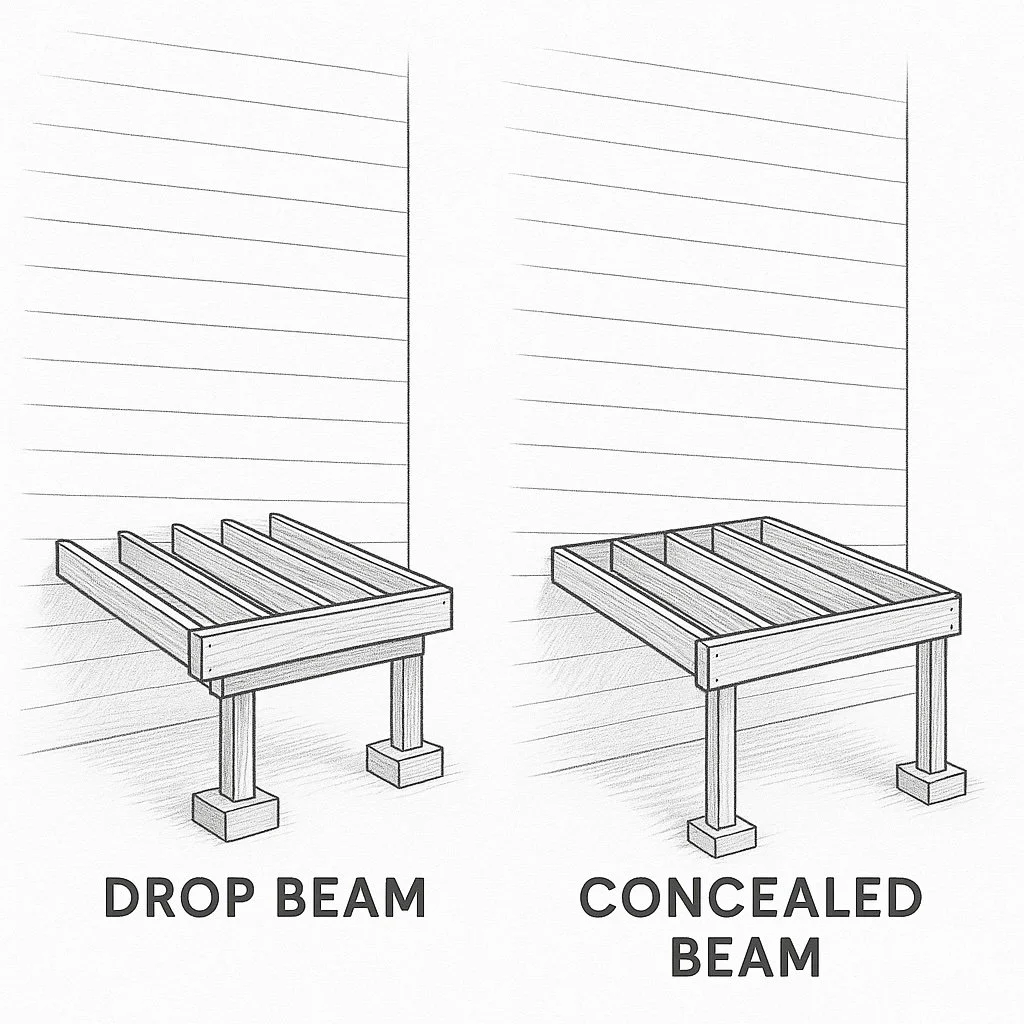
Concealed Beam vs. Drop Beam in Deck Framing: Key Differences Explained
Beams are the backbone of any deck’s structural framework. They transfer loads from the deck surface down to the posts and footings, ensuring the entire structure remains stable and safe. When designing or building a deck, one of the crucial framing decisions you'll face is whether to use a concealed beam or a drop beam. Though both support joists, they differ significantly in appearance, installation, and performance.
What is a Concealed Beam?
A concealed beam, also known as a flush beam, is installed within the same plane as the deck joists. This means the top of the beam and the top of the joists sit flush with one another. The joists are attached directly to the sides of the beam using joist hangers or other connectors.
Characteristics:
Hidden from view when deck boards are installed
Requires precise alignment with joists
Often used when minimal visual interruption is desired
Benefits:
Creates a cleaner, streamlined profile
Allows for lower deck heights, ideal for patios or door transitions
What is a Drop Beam?
A drop beam is installed beneath the joists, perpendicular to and supporting them from below. The joists typically rest on top of the beam or are attached to its sides.
Characteristics:
Fully visible beneath the deck frame
Positioned lower than the joist level
Generally spans farther between posts than a concealed beam
Benefits:
Offers superior structural strength for longer spans
Easier to install and modify post-build
Key Differences Between Concealed and Drop Beams
1. Placement and Visibility
Concealed Beam: Hidden within the joist line; ideal for decks with minimal clearance or visual profile needs.
Drop Beam: Positioned under the joists and clearly visible; creates a distinct layered appearance.
2. Structural Support and Load Transfer
Concealed Beam: Transfers load less efficiently due to reduced overlap and support surface.
Drop Beam: Superior in carrying heavy loads across longer spans; ideal for larger decks or decks without intermediate posts.
3. Aesthetic Considerations
Concealed Beam: Offers a sleeker, more modern appearance with no visible beams.
Drop Beam: Has a traditional, exposed-frame look and may be preferred for rustic or open underside decks.
4. Installation Complexity
Concealed Beam: More complex to align and fasten, especially in retrofits.
Drop Beam: Simpler installation and adjustments during construction.
5. Cost Comparison
Feature Concealed Beam Drop Beam Material Moderate Moderate to high Labor Higher (complex cuts/hangers) Lower (straightforward support) Total Cost Slightly more More efficient in larger spans
Pros and Cons of Concealed Beams
Pros Cons Sleek, clean design Reduced span strength Lower deck profile More challenging installation Ideal near door thresholds Requires joist hangers and precision
Pros and Cons of Drop Beams
Pros Cons Longer spans, fewer posts Visible framing below deck Easier to build and modify Less suitable for low-clearance decks Stronger load capacity May affect aesthetics in elevated designs
When to Use a Concealed vs. Drop Beam
Choose a Concealed Beam when:
You want a modern, streamlined look
Deck height must remain low for thresholds or zoning
Visual appearance takes precedence over span efficiency
Choose a Drop Beam when:
You're building a large deck with long spans
You want a more traditional or rustic design
Structural strength and ease of installation are priorities
Engineering and Code Requirements
Both beam types must follow local building codes, which often include:
Beam span tables: These guide acceptable distances based on lumber size and type
Attachment standards: For concealed beams, joist hangers must meet specific weight ratings
Post spacing: Drop beams allow wider spacing, potentially reducing the number of footings
Always consult your local code authority or structural engineer before construction.
Frequently Asked Questions
1. Can I switch from a concealed beam to a drop beam during a build?
Yes, but it may require reframing or altering joist heights.
2. Which beam type allows longer spans?
Drop beams generally allow greater spans with fewer supports.
3. Are concealed beams more expensive?
Yes, primarily due to higher labor costs and joist hanger requirements.
4. Can I use concealed beams on a second-story deck?
Yes, but drop beams are usually preferred for strength and durability at higher elevations.
5. Which one is better for DIY builds?
Drop beams are easier to install and require less precision during joist placement.
6. Do concealed beams rot more easily?
Not necessarily, but because they’re enclosed and harder to inspect, maintenance may be trickier.
Conclusion
The choice between a concealed beam and a drop beam comes down to your priorities—appearance, deck height, structural needs, and installation ease. Concealed beams are ideal for sleek, low-profile decks, while drop beams offer unbeatable strength and simplicity. Weigh the pros and cons carefully, and consult a builder if needed, to ensure your deck not only looks great but stands the test of time.
Want to talk to us about your deck project?
