
Building a Code-Compliant Deck
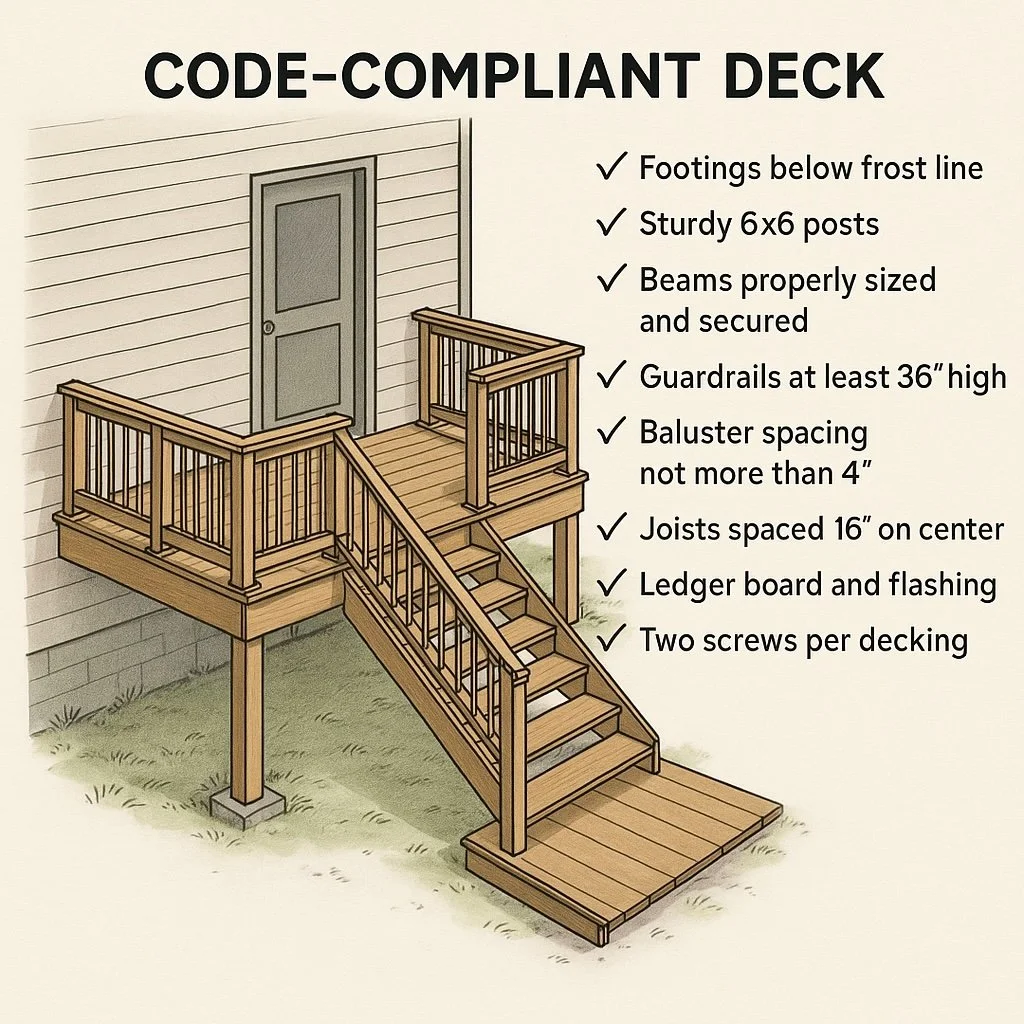
Pennsylvania Deck Building Code: 2025 Guide to Building a Code-Compliant Deck from Footings to Final Board
When you're looking to build a deck in Pennsylvania, it's not just about aesthetics or increasing home value—it's also about safety and compliance. Whether you're planning a weekend DIY project or hiring a professional contractor, following the Pennsylvania Uniform Construction Code (UCC) is crucial. This comprehensive guide walks you through the entire process of building a code-compliant deck in PA, from digging your first footing to placing your final deck board.
Understanding Pennsylvania's Deck Building Regulations
Pennsylvania’s deck construction regulations are based on the International Residential Code (IRC), as adopted by the Pennsylvania UCC. These standards ensure structural safety, durability, and usability, especially in the state's varied climate. The rules govern everything from footing depth to railing height and stair geometry.
For example, if your deck is more than 30 inches above ground, guardrails at least 36 inches high are mandatory. Similarly, concrete footings must be at least 36 inches deep to prevent frost heave during the winter months. Understanding these baseline requirements early can save you from costly mistakes later.
Planning and Permitting: Your First Legal Step
Every deck project in Pennsylvania starts with one critical step: acquiring the proper permits. If your deck will be attached to your home or elevated more than 30 inches above grade, a building permit is legally required. The permit application typically includes:
A detailed construction drawing or blueprint
Site plan showing property lines, setbacks, and deck placement
List of materials and structural specifications
It's also wise to check local zoning regulations, which may impose restrictions on deck size, location, or height. Once you submit your paperwork, expect a short waiting period for plan review before construction can begin.
Preparing Your Site
Site preparation lays the foundation—literally—for your deck's long-term success. Choose a level area with good drainage to prevent future water damage. Begin by marking the deck’s perimeter with stakes and string lines. Then clear any grass, rocks, and roots from the construction area.
Before you dig a single hole, it’s essential to call 811, the national “Call Before You Dig” number. This free service will coordinate with local utility companies to mark the locations of underground lines for gas, water, electric, and telecommunications. Digging without this step can result in serious injury, property damage, legal liability, and expensive repairs—not to mention project delays.
Once the site is cleared and all utilities have been safely marked, you may need to regrade the area slightly or install a gravel base if the soil retains water. Taking the time to prep the site thoroughly ensures that your footings will stay dry and stable.
Digging and Pouring the Footings
In Pennsylvania, frost lines run deep—typically 36 inches below grade. This means your deck footings must extend at least that far down to avoid frost heave. Use an auger or post-hole digger to excavate holes 12 inches in diameter or wider, depending on the load your deck will bear.
Insert cylindrical concrete forms into the holes, ensuring they’re plumb and level. Then pour concrete into each form, embedding metal post anchors while the concrete is still wet. Let the footings cure for at least 24 to 48 hours before installing posts.
Posts and Beams: Building a Solid Frame
Once your footings are ready, attach your vertical posts—typically 6x6 pressure-treated lumber for taller decks—using metal brackets or anchor bolts embedded in the concrete. These posts will support the horizontal beams that run along the perimeter and middle of your deck.
The spacing of your beams depends on your joist span and the total load. Beams must be doubled (i.e., sistered together) and attached securely to the posts using through-bolts or approved structural connectors. Always check beam span charts to ensure compliance with code.
Ledger Board: Secure Connection to the House
If your deck is attached to your home, the ledger board becomes one of its most critical components. This horizontal board must be bolted directly into the house’s rim joist using lag bolts or through-bolts—not just nails or screws.
To prevent moisture from seeping behind the ledger board, install metal flashing that diverts water away from your home's exterior wall. A well-secured and properly flashed ledger board ensures your deck doesn’t pull away from the house over time.
Joist Installation: Structuring the Platform
Joists are the horizontal framing members that support your decking boards. For a standard residential deck, 2x8 or 2x10 joists are most common, spaced 16 inches on center (OC). Use galvanized joist hangers to attach joists to the ledger board and beams.
Ensure the joists are level and parallel, and double-check spacing to match your chosen decking material. Joist spacing impacts not only structural integrity but also how your final deck boards look and feel underfoot.
Decking Boards: The Visible Finish
Once your joist system is complete, you’re ready to lay down the decking boards. Whether you choose pressure-treated lumber, composite, or tropical hardwoods, make sure the boards are rated for outdoor use and meet local code requirements.
It's critical to research the specific decking material you plan to use. Each product—whether natural wood or synthetic composite—comes with its own manufacturer installation guidelines regarding spacing, fastening systems, and joist requirements. Ignoring these recommendations can void warranties, compromise structural integrity, and lead to costly repairs down the line.
Secure the boards using two corrosion-resistant screws or nails at each joist unless otherwise specified by the manufacturer. Hidden fastener systems are also popular for composite decks, offering a cleaner look and often required for maintaining material warranties.
Stair Construction: Safe and Compliant Access
Deck stairs must adhere to strict code requirements for safety. The maximum riser height is 8¼ inches, and the minimum tread depth is 9 inches. The stair angle should fall between 34° and 38°, and all steps must be uniform in size.
If your stairs exceed 30 inches in height, install a handrail on at least one side. Stair stringers—usually made from 2x12 lumber—must be securely attached to the deck and supported by a landing pad or footing at the bottom.
Railings and Guardrails: Protecting Elevated Spaces
For any deck that sits more than 30 inches above grade, Pennsylvania code mandates guardrails at least 36 inches high. The space between balusters must not exceed 4 inches to prevent small children from slipping through.
Use structural connectors to attach railing posts to the frame, and always anchor them below the top surface for strength. Railings can be made from wood, metal, vinyl, or composite materials—as long as they meet structural requirements.
Inspection: Getting the Green Light
Inspections are not optional. Your local building authority will want to inspect:
Footings – Before you pour concrete
Framing – Before you install decking boards
Final Inspection – Once the deck is complete
Each inspection ensures your work complies with safety and structural standards. Be sure to call ahead and allow enough time for scheduling.
Maintaining Your Deck: Longevity Tips
To keep your deck in prime condition:
Inspect annually for rot, loose fasteners, or cracked boards.
Clean regularly using a deck-safe solution to remove dirt and mildew.
Seal or stain wooden decks every 2-3 years to protect against moisture.
Proper maintenance not only extends the life of your deck but also ensures ongoing safety.
Conclusion: Building with Confidence
Constructing a deck in Pennsylvania that complies with state building codes may seem daunting, but with the right planning, tools, and know-how, it’s entirely achievable. By following each step—from site preparation and proper footing depth to precise joist spacing and railing installation—you’ll create a beautiful, durable, and safe outdoor space you can enjoy for years to come.
