
What Actually Happens After You Sign a Deck Contract
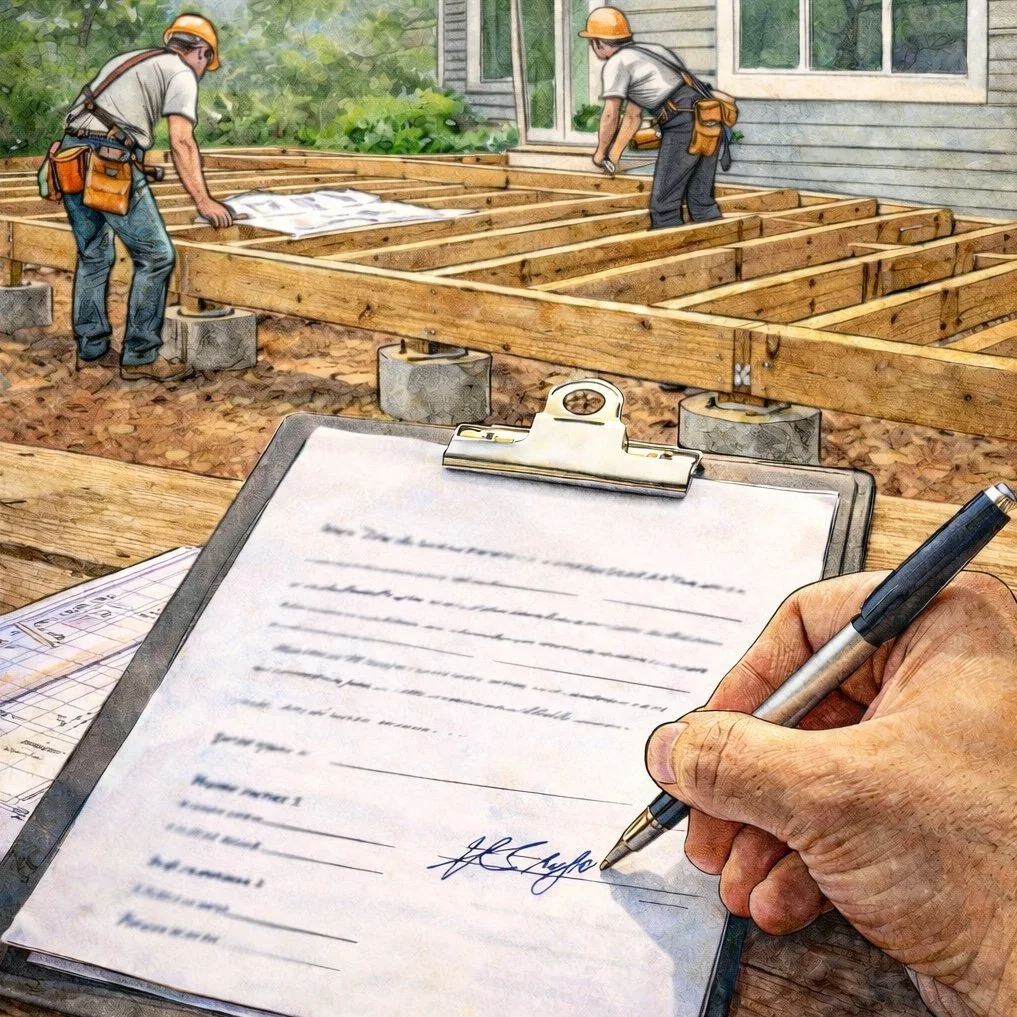
The Deck Construction Process: What Happens After You Sign the Contract
Signing a deck contract feels like the finish line—but in reality, it’s the starting gun.
For most homeowners, what happens next is a black box. Weeks go by, there’s paperwork, maybe silence, then suddenly materials show up in your driveway.
So let’s pull the curtain back.
Here’s what actually happens after you sign a professional deck contract—and why each step matters more than most people realize.
Step 1: Pre-Construction Planning (The Calm Before the Noise)
Before a shovel hits the ground, there’s behind-the-scenes work happening.
This typically includes:
Final review of scope and selections
Confirming dimensions, elevations, and layout
Reviewing code requirements and setbacks
Identifying any site constraints (grade, drainage, access)
Pre-construction walkthrough
This is where small assumptions get caught before they become expensive change orders.
If your contractor rushes this step, it usually shows up later as delays or compromises.
Step 2: Permit Drawings & Submissions
Most decks require permits—and permits require drawings.
At this stage:
Structural layouts are finalized
Footing sizes and spacing are defined
Framing details are clarified
Railing heights and stair geometry are confirmed
These drawings are submitted to the municipality for approval.
This step can take anywhere from a few days to several weeks depending on the township. No reputable contractor skips it—because permits protect you, not the builder.
Step 3: Scheduling & Material Ordering
Once permits are approved (or close), scheduling begins.
This includes:
Ordering framing materials (wood or steel)
Ordering decking, railings, fasteners, and hardware
Coordinating delivery windows
Aligning crew availability with inspections
Higher-end materials often have longer lead times, which is why some projects don’t start immediately after signing.
Good contractors schedule backwards from material arrival—not guess and hope.
Step 4: Layout & Footings (Where the Deck Is Truly Born)
The first on-site work is almost always layout and excavation.
This includes:
Confirming deck location and projection
Marking post and footing locations
Excavating below frost depth
Pouring concrete footings
This phase determines:
How solid the deck feels
Whether it settles over time
How well loads are transferred to the ground
You won’t see much progress yet—but this is one of the most critical phases of the entire project.
Step 5: Framing (The Skeleton of the Deck)
Once footings cure and inspections pass, framing begins.
Depending on the system, this may involve:
Pressure-treated lumber framing
Steel deck framing systems
Beams, joists, blocking, and ledger connections
This is where craftsmanship shows up:
Straight lines
Tight tolerances
Proper fastener placement
Thoughtful load paths
A well-framed deck feels solid before a single board is installed.
Step 6: Framing Inspection
Before anything gets covered:
Inspectors verify footing placement
Check beam and joist sizing
Confirm ledger attachment
Review hardware and fasteners
Passing this inspection means the structure meets code before it’s hidden forever.
This is also why shortcuts are a bad idea—there’s no hiding structural work.
Step 7: Decking, Railings & Stairs
Now comes the part everyone recognizes.
This phase includes:
Installing decking boards
Building stairs and landings
Installing railings and guards
Fine-tuning alignment and spacing
This is where aesthetics meet structure—and where patience pays off. Clean lines and tight details take time.
Step 8: Final Inspection & Walkthrough
The last step:
Final municipal inspection
Contractor walkthrough
Punch-list items addressed
Care and maintenance guidance
At this point, the deck isn’t just “done”—it’s approved, safe, and ready for years of use.
Why This Process Matters
If a contractor glosses over these steps or can’t clearly explain them, that’s a red flag.
A deck isn’t just a surface—it’s:
A structural extension of your home
A permitted improvement
A long-term investment
Understanding the process helps you:
Know what delays are normal
Spot real issues vs noise
Trust the timeline
