
Premium Concrete Footings
Premium Concrete Footings: The Most Important Part of a Deck You’ll Never See
When most homeowners imagine a new deck, they picture the surface:
Beautiful composite boards
Stylish railings
Built-in lighting
A comfortable outdoor living space
But none of those things matter if the foundation underneath isn’t done right.
The single most important part of any deck isn’t the decking, the railing, or even the framing.
It’s the concrete footings buried in the ground.
And upgrading those footings from “minimum code” to a premium installation can make the difference between a deck that lasts decades and one that slowly becomes a problem.
What Do Deck Footings Actually Do?
Deck footings have one simple but critical job:
They transfer the entire weight of your deck into stable soil.
Everything on your deck depends on them:
The structure
The furniture
Snow loads
Groups of people
Hot tubs or heavy features
All of that weight is carried through the posts and beams down into a few concrete pads underground.
If those pads move, sink, crack, or heave, the entire deck is affected.
Why Footings Matter More in Pittsburgh’s Climate
Here in Western Pennsylvania, footings have to deal with tough conditions:
Heavy clay soils
Significant freeze/thaw cycles
Seasonal moisture changes
Frost depths of 36 inches or more
This environment is hard on foundations.
That’s why “just meeting code” isn’t always the smartest long-term approach.
The Problem with Bare-Minimum Footings
Many deck builders install footings in the quickest, cheapest way that still passes inspection.
That might look like:
A small diameter hole
Minimal concrete
Shallow depth
No reinforcement
Posts set directly into the concrete
Technically, that can meet basic requirements.
But over time it can lead to:
Settling
Leaning posts
Uneven decks
Doors that stop latching
Railings that loosen
Stairs that shift
Homeowners don’t usually notice these problems right away.
They show up 3–8 years down the road.
What Makes a Footing “Premium”?
A premium footing system goes beyond the bare minimum.
Here are some of the upgrades that create a far more reliable foundation:
1. Larger Diameter Footings
Bigger footings distribute weight better.
Instead of a small pier, a premium footing may use:
Wider bases
More concrete volume
Greater bearing surface
This reduces the chance of sinking or movement.
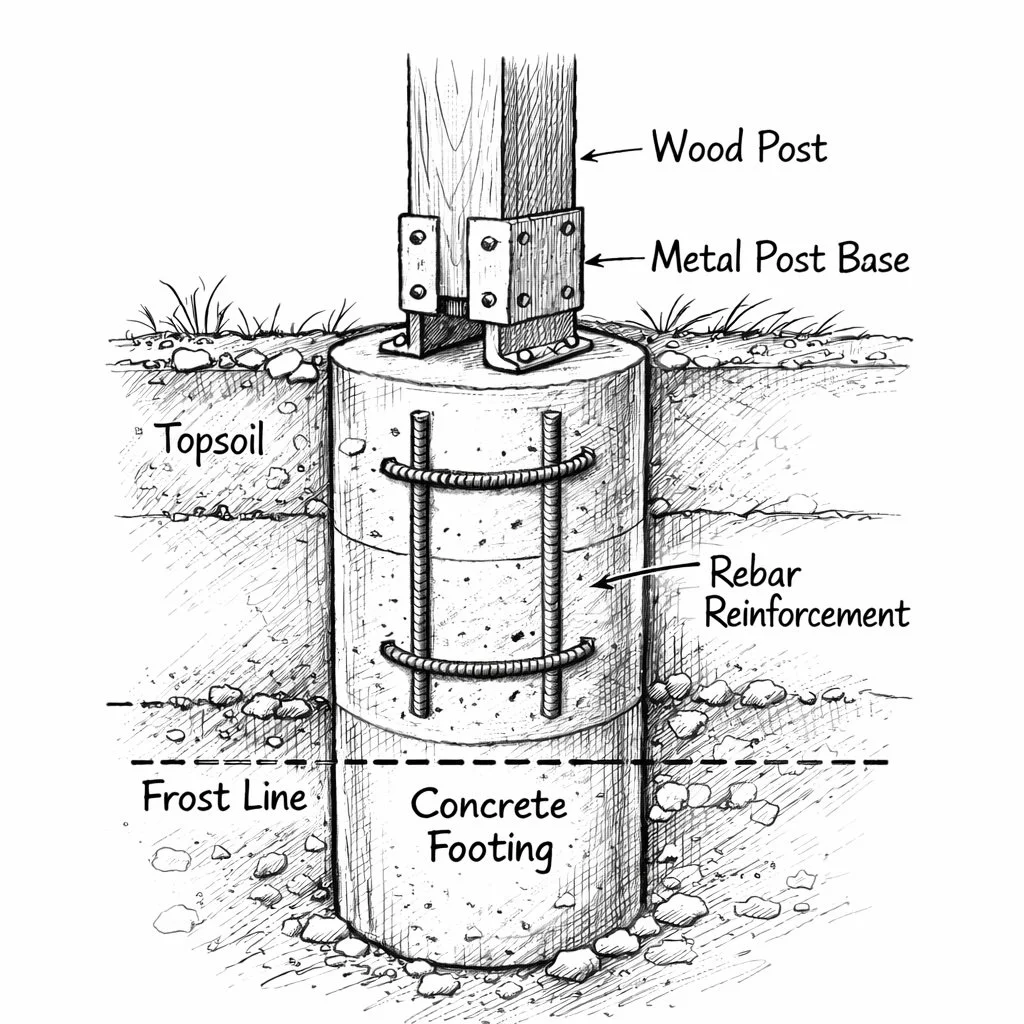
2. Proper Depth Below Frost Line
Premium installations don’t just “hit code depth.”
They ensure:
Clean, undisturbed soil
Consistent depth
Extra margin for difficult conditions
Going deeper protects against frost heave, one of the biggest enemies of decks in our region.
3. Reinforced Concrete
Adding steel reinforcement inside the footing can:
Prevent cracking
Add structural strength
Improve long-term durability
This is especially important for larger decks, roofs, or multi-level structures.
4. Sonotubes or Formed Piers
Using proper concrete forms creates:
Clean, uniform piers
Better load transfer
More consistent results
Instead of rough holes in dirt, you get engineered, predictable supports.
5. Elevated Post Bases
A true premium system keeps wood out of direct contact with concrete.
This means:
Metal post bases
Proper standoffs
Protection from moisture
Which leads to:
Less rot
Longer post life
A more serviceable structure
When Premium Footings REALLY Matter
Upgraded footings are especially important if your project includes:
Large or elevated decks
Roof structures
Screened porches
Hot tubs
Heavy stone features
Poor soil conditions
Sloped yards
The bigger the project, the more critical the foundation becomes.
The Real Cost Difference
Upgrading footings usually represents a relatively small portion of a deck budget.
But it dramatically improves:
Stability
Longevity
Safety
Resale value
Peace of mind
In many cases, the upgrade cost is measured in hundreds of dollars—not thousands—yet it protects an investment worth tens of thousands.
What Happens When Footings Fail
We’re often called to repair decks built with inadequate footings.
Common issues include:
Posts sinking into the ground
Decks pulling away from the house
Cracked concrete
Uneven walking surfaces
Unsafe railings
Fixing these problems later is almost always far more expensive than doing the footings right the first time.
Questions Every Homeowner Should Ask
Before hiring a deck builder, ask:
How deep will the footings be?
What diameter will they be?
Will they be reinforced?
Will posts touch concrete directly?
How is frost heave addressed?
If a contractor can’t clearly answer those questions, that’s a red flag.
The Bottom Line
You’ll never show your friends your deck footings.
But they are the quiet heroes holding everything together.
At Heritage Deck & Frame, we believe:
Building above code where it matters most is what creates decks that last for generations.
And nothing matters more than the foundation beneath your feet.
Want to talk to us about your deck’s footings?
