
Attached vs. Free-Standing
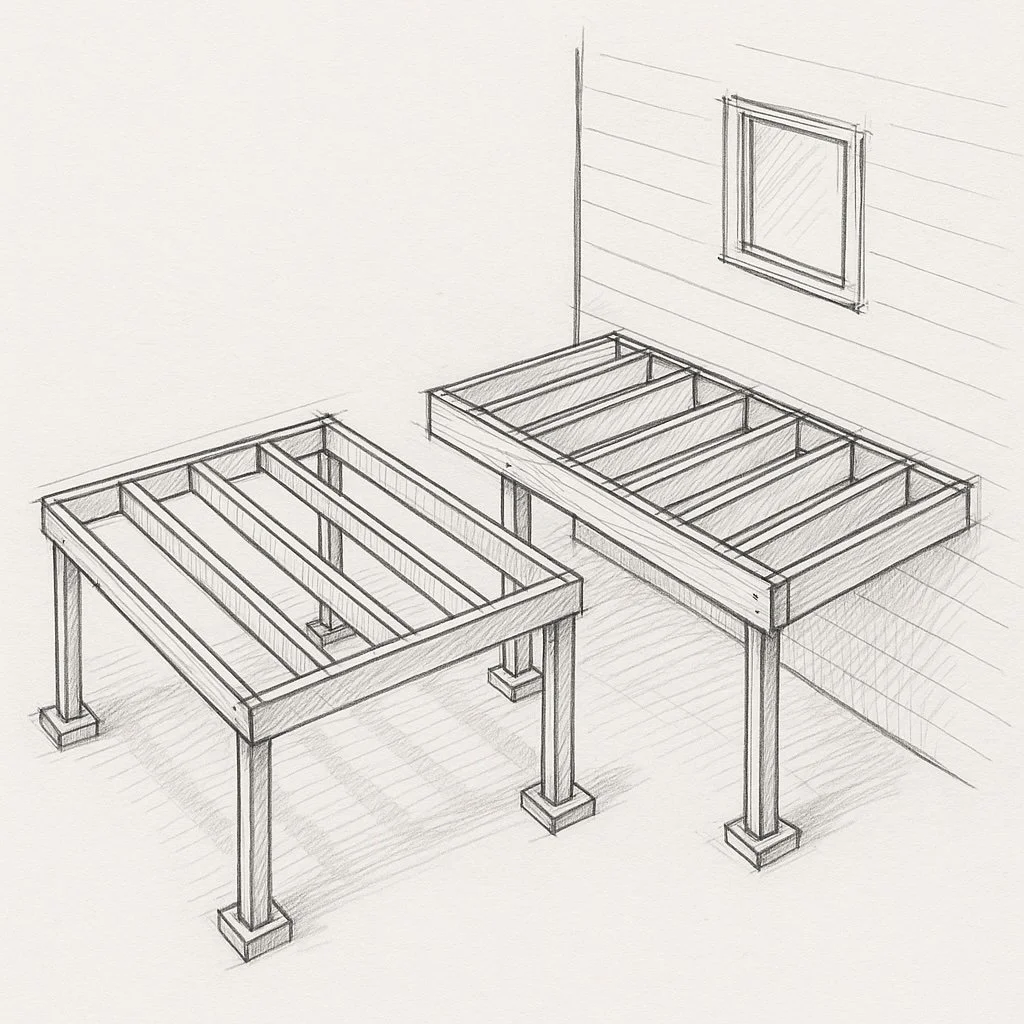
Attached vs. Free-Standing Decks: Key Differences, Pros & Cons Explained
Decks are a valuable extension of your living space, offering a cozy spot for entertaining, relaxing, or enjoying nature. Whether you're designing a new deck or replacing an old one, the first major decision is choosing between attached decks and free-standing decks. These two types differ significantly in how they're built, how they function, and what they cost. Let's explore these distinctions to help you make the right choice.
What is an Attached Deck?
An attached deck is directly connected to your home. It uses a ledger board fastened to the house’s framing, providing support on one side, while the opposite end is supported by posts and footings.
Key Characteristics:
Built flush with an entry door or threshold
Shares structural support with the house
Often integrated with the architecture of the home
Common Use Cases:
Extending indoor living spaces outdoors
Providing easy access from kitchen, living room, or dining areas
Adding seamless transitions between home and deck
What is a Free-Standing Deck?
A free-standing deck, also called a detached or floating deck, is an independent structure. It doesn't rely on your home for support and instead stands on its own with footings or piers at all four corners (and possibly more for larger decks).
Key Characteristics:
No attachment to the home’s structure
Full support comes from posts and beams
Can be placed anywhere in the yard or garden
Ideal Scenarios:
Homes where attachment isn’t possible due to design or code restrictions
Sloped or uneven landscapes
Creating island-style retreats away from the house
Key Differences Between Attached and Free-Standing Decks
1. Structural Design
Attached Decks: Use the home's structure for partial support; require a ledger board.
Free-Standing Decks: Fully self-supported; require more posts and footings.
2. Foundation Requirements
Attached Decks: Must align precisely with the home and foundation; limited flexibility.
Free-Standing Decks: Greater freedom in positioning; ideal for uneven ground.
3. Building Codes and Permits
Attached Decks: Subject to stricter inspection rules; ledger attachment must meet specific code requirements.
Free-Standing Decks: Easier to approve in some jurisdictions; fewer risks to home structure.
4. Installation Complexity
Attached Decks: Require cutting siding and installing flashing; may involve structural modifications.
Free-Standing Decks: Simpler for DIYers; no need to tamper with existing structures.
5. Cost Comparison
Materials: Attached decks are typically less expensive since they require fewer posts and framing components. Free-standing decks cost more because they need additional beams and footings for full support.
Labor: Labor is usually higher for free-standing decks due to the extra framing and foundation work involved. Attached decks require less overall labor.
6. Maintenance Needs
Attached Decks: Prone to water intrusion if not sealed properly; can cause rot in the home’s siding or foundation.
Free-Standing Decks: Less risk of moisture damage to the house; better airflow around all sides.
7. Aesthetic Integration
Attached Decks: Blends naturally with the home; feels like a room extension.
Free-Standing Decks: Offers a unique design focal point; great for landscaped yards.
Pros and Cons of Attached Decks
Pros Cons Seamless connection to the home Requires flashing and waterproofing Uses fewer posts and beams Risk of water damage to home Cost-effective for smaller sizes May need structural review
Pros and Cons of Free-Standing Decks
Pros Cons Greater location flexibility Requires more materials Less risk to home’s structure May feel disconnected from the house Easier for sloped or uneven yards More structural support needed
When to Choose Attached Over Free-Standing (and Vice Versa)
Choose Attached if your deck is meant to be a natural extension of an indoor room, or if you want to maximize space near the house.
Choose Free-Standing when you want flexibility, have structural constraints, or prefer a detached, private retreat.
Hybrid Designs: Combining Both Styles
Some homeowners opt for a hybrid design. For example, the deck may be close to the house but not physically attached—offering flexibility while avoiding structural complications. Others may build multiple tiers: an attached main deck with a lower free-standing platform.
Frequently Asked Questions
1. Can a free-standing deck touch the house?
Yes, but it must be structurally independent with a gap for drainage and airflow.
2. Is one type cheaper to build?
Attached decks may cost less in materials but more in labor due to home integration. Free-standing decks often cost more in materials.
3. Which deck type lasts longer?
With proper maintenance, both can last decades. Free-standing decks may be less prone to water-related damage.
4. Do free-standing decks need permits?
Often yes, depending on height, size, and local building codes.
5. Can I build an attached deck myself?
DIY is possible but challenging. Improper attachment can damage your home or lead to code violations.
6. What deck type is better for sloped land?
Free-standing decks offer more flexibility for uneven or sloped terrain.
Conclusion
The choice between an attached deck and a free-standing deck depends on your goals, landscape, and home layout. Attached decks offer easy access and integration, while free-standing decks provide flexibility and safety from structural concerns. With this guide, you're now equipped to choose the right deck style for your outdoor sanctuary.
Ready to get the deck you really want?
